Off-center striking is a specific type of mistake during the making of coins, this error happening when the metal disc is not exactly centered between the two stamping tools at the moment of the hit.
The United States Mint creates billions of coins every year, showing very careful machine work, but sometimes failures occur in the process, leading to these distinct production errors, which can be easily detected by a coin checker app.
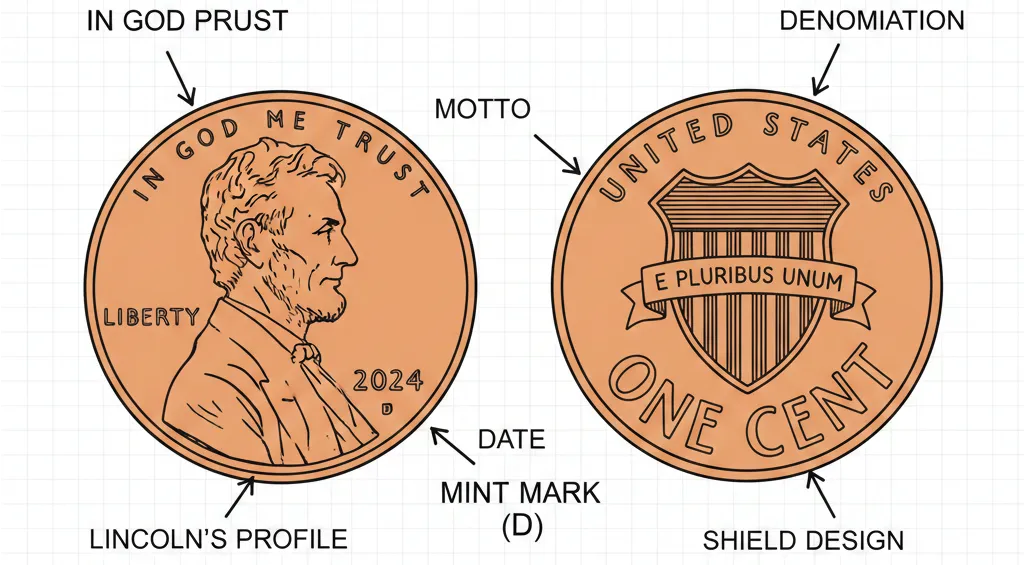
Normal Coin Striking Process
To understand the error clearly, we must first describe the correct process of stamping, requiring several precise steps.
- The blank piece, often called the planchet, is a smooth round part made of metal, bearing no pictures or letters on its surface. For the Lincoln Cents, this piece is usually a disc made from pure copper or a mixed copper material
- The metal discs are fed from a large holding container, then carried into the striking zone using a highly specialized feeding machine. This feeding machine must put the disc exactly in the middle position under the stamping tools
- The coin press, containing the machinery for making coins, has two main tools: the top tool showing the front picture and the bottom tool showing the back picture. The metal disc rests on the bottom part of the press
- The collar performs two necessary tasks: 1. Making sure the metal disc stays exactly in the center place between the two stamping tools. 2. Shaping the side edge of the coin during the strike. During the moment of impact, the collar stops the metal from spreading out too far, giving the coin its neat, round edge
After the hit, the stamping tool lifts up, and the newly finished coin is pushed out by a mechanism, quickly clearing the space for the next waiting metal disc.
Why Off-Center Strikes Occur
Most often, the off-center strike happens because the machine feeding the metal disc fails to work correctly or does not fully complete its movement, causing the disc to stop before it reaches its central spot under the stamping tools.
For instance, the metal disc might only be halfway placed in its correct position.
Less commonly, a problem might happen where two metal discs get stuck together or enter the press at the same time.
In this unusual situation, the striking force might hit both discs, with one metal disc certainly being badly moved away from the center.
If the strong metal collar is either missing from the press or incorrectly moved, or if it does not completely wrap around the metal disc, the disc can easily slide away from the center point.
A strike happening without the collar means the metal has no side restriction, leading to a very strong off-center hit and the metal spreading widely beyond the normal round shape of the coin.
How the Percentage Off-Center Changes the Value
- Small Off-Center (5%–10%): On the coin, almost all of the design parts are still easy to see, but the coin shows one edge of the empty field looking wider than the edge directly opposite it, these being the least valuable errors among all off-center strikes
- Medium Off-Center (15%–35%): In this noticeable range, a noticeable part of the coin’s picture is fully missing or cleanly cut off, with the key parts, such as the important date, usually remaining visible, these coins being much more wanted by collectors
- The Best Off-Center Range (Around 30%–45%): This range is often searched for by collectors, the stamping tool hitting far enough from the center, successfully creating a large empty half-circle on the coin, but also leaving the whole date and the main portrait clearly visible for inspection, these being the most highly priced coins which are better to be checked by the PCGS or a coin values app.
- Big Off-Center (40%–55%): In this large range, the off-center position becomes very strong and dramatic, a big section of the coin’s image, including the outer letters and, most critically, the date, possibly being completely cut off or gone from the surface, these having high value unless the date is completely missing
- Very Strong Off-Center (55% and More): With such an extremely strong off-center position, the stamping tool only makes contact with the very outer edge of the metal disc, the resulting coin possibly looking like a simple half-circle, this being the highest rarity, leading to the top value if the date is somehow kept visible
| 5%–10% | Least Valuable |
| 15%–35% | Medium Value |
| 30%–45% | Most Valuable |
| 40%–55% | High Value |
| 55% and More | Highest Rarity |
Comparison with Other Errors
The Off-Center Strike error should not be confused with other different but slightly similar mistakes in the manufacturing process.
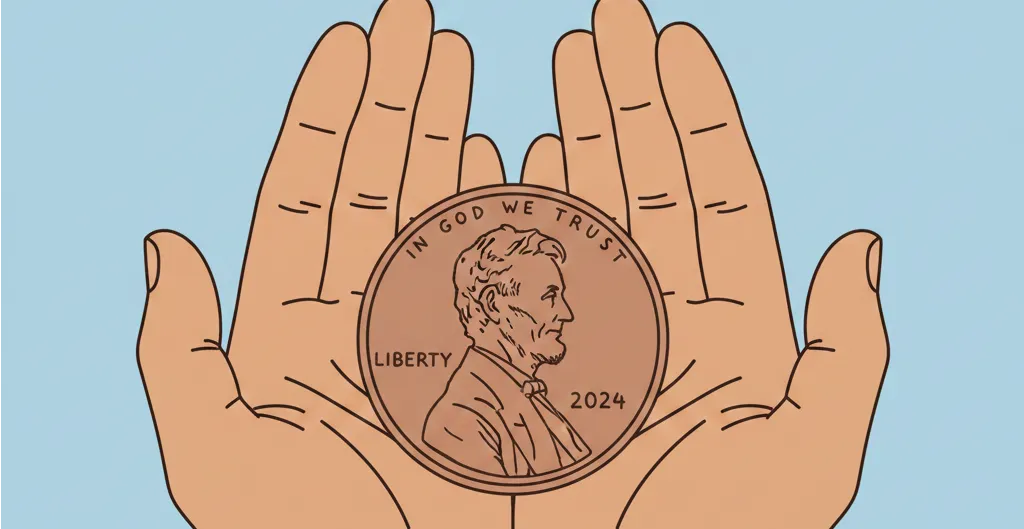
- Double Die: The whole coin is struck perfectly in the center, but the letters and numbers look clearly double. This is a completely different kind of mistake, having no connection to the metal disc’s off-center position but if you’re not sure on what particular error you have — a coin value checker app will help you.
- Die Shift: A die shift is usually much less visible than a full off-center strike. In an off-center strike, the metal disc is fed in the wrong place; in a die shift, the metal disc is in the correct center spot, but the stamping tool itself moves slightly. A die shift gives only a very small, subtle effect on the coin’s look.
Because of this, the off-center strike remains one of the most visually impressive and easily seen errors in coin collecting, and the exact off-center percentage, specifically the amount keeping the date visible while clearly showing the mistake, is the key factor deciding the high price these coins command.
The stronger the move away from the center, the higher the price a serious collector will want to pay for this specific failure.